

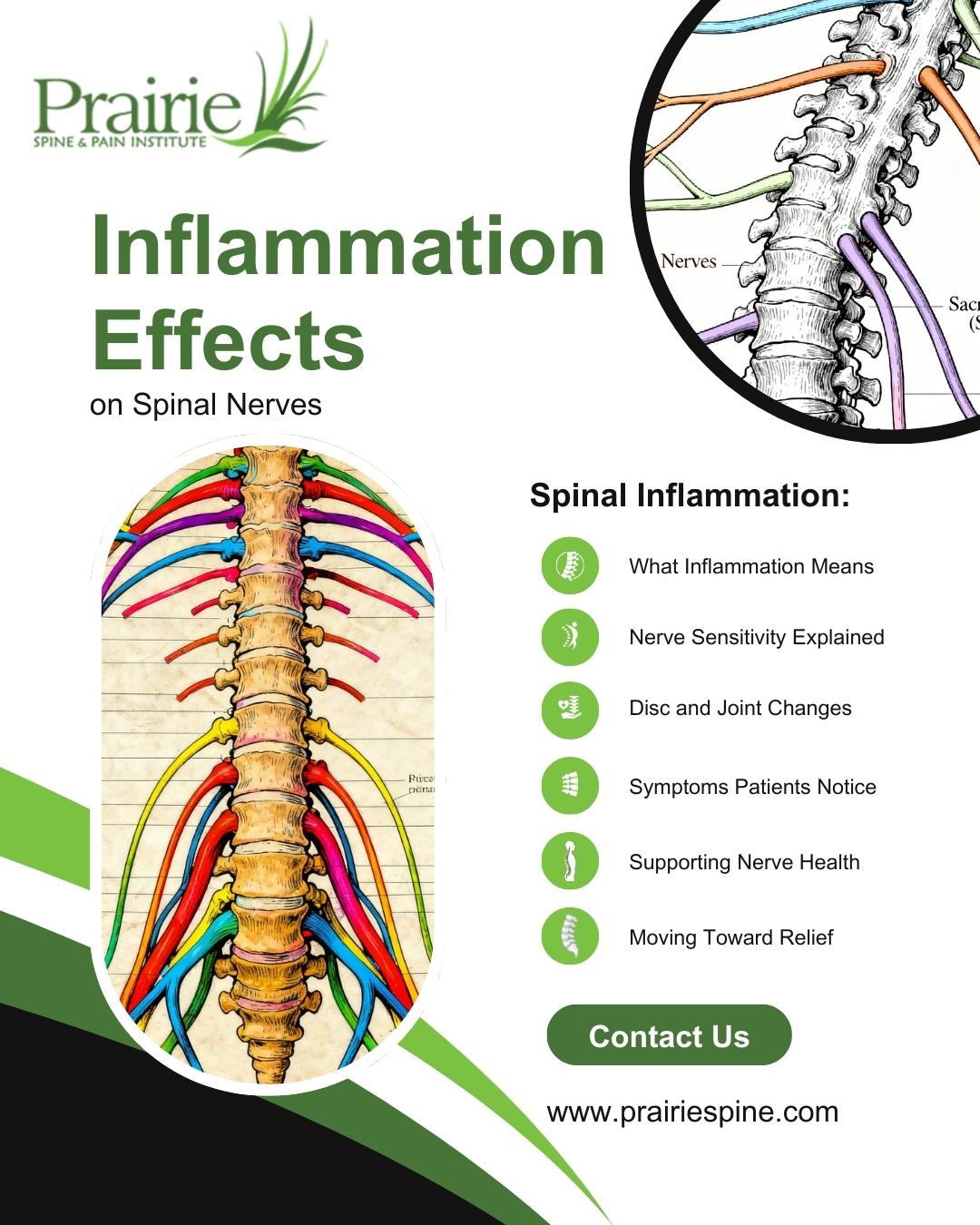
 Inflammation is a normal part of the body’s healing response, but when it affects the spine it can interfere with nearby nerves. Many patients visiting Prairie Spine seek clear information about why inflammation leads to pain, numbness, or weakness. Understanding the biological process in simple terms can make symptoms feel less confusing and more manageable. This article explains the inflammation effects on spinal nerves using patient friendly language and practical context. It focuses on how swelling develops, why nerves are sensitive, and what that means for daily comfort and mobility.
What Inflammation Means
Inflammation is the body’s way of protecting injured tissue and starting the repair process. When an area of the spine is irritated by injury, disc changes, or joint stress, the immune system sends fluid and specialized cells to the region. This response creates swelling, warmth, and chemical signals designed to promote healing. In a confined space such as the spinal canal, even a small increase in swelling can affect nearby structures. Because spinal nerves run through narrow openings, they are particularly vulnerable to pressure. This is one of the key inflammation effects on spinal nerves that patients experience as pain or tingling.
Nerve Sensitivity Explained
Spinal nerves function like electrical cables that carry messages between the brain and the body. These nerves rely on space, blood flow, and a stable chemical environment to work properly. Inflammatory chemicals can make nerve fibers more sensitive, which means they send stronger pain signals even with mild pressure. At the same time, swelling can reduce circulation around the nerve, limiting oxygen and nutrients. This combination often produces symptoms such as burning sensations, numbness, or weakness in the arms or legs. Understanding this process helps patients see why symptoms may persist even after the original injury improves.
Disc and Joint Changes
Conditions that affect spinal discs and joints are common sources of inflammation. A bulging or herniated disc can release proteins that trigger an immune response in surrounding tissue. Arthritic joints in the spine can also generate ongoing irritation that leads to chronic swelling. These structural changes narrow the pathways where nerves travel, increasing the likelihood of compression. Over time, repeated stress can maintain a cycle of irritation and sensitivity. Recognizing these mechanical contributors helps guide treatment choices that reduce inflammation and protect nerve function.
Symptoms Patients Notice
The inflammation effects on spinal nerves often appear in predictable patterns based on the nerve involved. In the neck, patients may feel discomfort that travels into the shoulder, arm, or hand. In the lower back, symptoms frequently extend into the hip, leg, or foot. Sensations can include sharp pain, pins and needles, muscle weakness, or reduced coordination. These changes may worsen with certain movements or prolonged positions because pressure around the nerve increases. Clear communication about these symptoms allows providers to identify the affected level of the spine.
Supporting Nerve Health
Reducing inflammation is an important part of protecting spinal nerves and improving function. Treatment plans often include targeted physical therapy, guided exercise, and other non surgical approaches that create more space for the nerve. Anti inflammatory strategies may also involve lifestyle adjustments such as posture awareness and movement modification. In some cases, image guided procedures help calm irritated tissue around the nerve root. The goal is to restore normal signaling and decrease pain without unnecessary intervention. Consistent care can improve mobility and help patients return to regular activities.
Moving Toward Relief
Understanding how inflammation affects spinal nerves gives patients a clearer path toward effective care. When the biological process is explained in straightforward terms, it becomes easier to connect symptoms with treatment options. Prairie Spine focuses on identifying the source of inflammation and selecting therapies that support long term function. Early evaluation can prevent temporary irritation from becoming a chronic problem. With the right approach, many people experience meaningful improvement in comfort and daily movement.